HURRY! BOOK NOW!
TIME RUNNING OUT TO COLLECT TODAY!
There are a number of questions and rules about how to send your hazardous goods via pallet delivery networks
ADR stands for Accord européen relatif au transport international des marchandises Dangereuses par Route—which translates to the European Agreement concerning the International Carriage of Dangerous Goods by Road. Established in 1957, ADR provides uniform rules across Europe to ensure hazardous goods can be transported safely and consistently across borders. Even though the UK is no longer part of the EU, ADR still applies, ensuring seamless trade and safety alignment with Europe.
ADR matters because hazardous goods are all around us. Petrol, cleaning chemicals, fertilizers, medical gases—these are just a few everyday examples. Improper handling can result in fires, explosions, chemical spills, or even widespread health risks. ADR ensures there’s a system in place so that:
In the UK, ADR compliance is not just about meeting legal requirements; it’s about building trust. Customers want assurance that logistics companies follow best practices. Insurers demand compliance before offering coverage. Regulators enforce penalties to keep rogue operators in check.
UN numbers are unique identifiers assigned to hazardous substances or materials that pose potential risks during transport. The United Nations Committee of Experts on the Transport of Dangerous Goods set these numbers, ensuring safety and effective communication across the global supply chain.
The UN number range spans from UN0001 to approximately UN3500. Each number corresponds to a specific substance or a group of substances with similar properties and risk profiles.
There are a couple of ways that you can find the UN Number of a product:-
Alongside UN numbers, the Department of Transportation (DOT) mandates that hazardous cargo display hazmat placards. It is a diamond-shaped sign that visually indicates the type of danger a substance presents. It also alerts the public and regulatory authorities about the presence of dangerous goods.
Like road warning signs, hazmat placards use standardized symbols, colours, and numbers to convey information immediately. For instance, a red placard with a flame symbol signifies flammable liquids, while a skull and crossbones represent toxic materials.
Failing to display the correct hazmat placards and numbers on your products and outer wrap of pallets/ parcels can result in hefty fines, legal penalties, and potential safety hazards.
Each load of hazardous goods must be accompanied by: Dangerous Goods Note (DGN) – Lists what’s being transported.
Missing or incorrect documentation is a serious offence and can result in fines, shipment delays, or seizure of goods.
A DGN, or Dangerous Goods Note, is a legal document that provides detailed information about hazardous goods being transported, including their nature and potential risks. It is required for shipping dangerous goods to ensure safe handling and compliance with transportation regulations.
Yes, Lithium batteries are classified as dangerous goods due to their potential to overheat, catch fire, or even explode if not handled correctly. These risks make stringent compliance with transport regulations not just a legal obligation but a vital component of public safety.
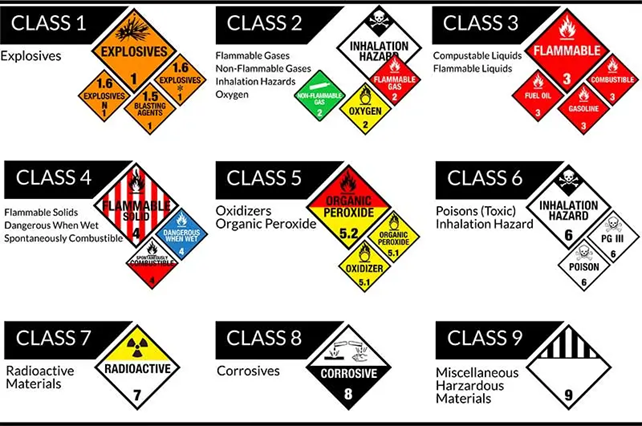
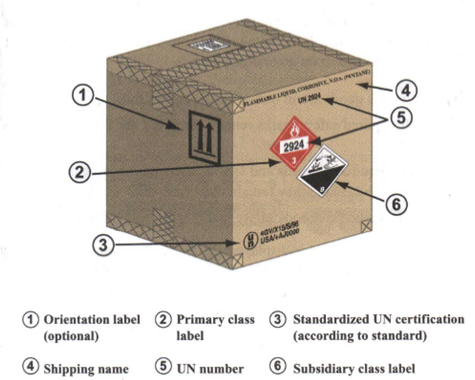
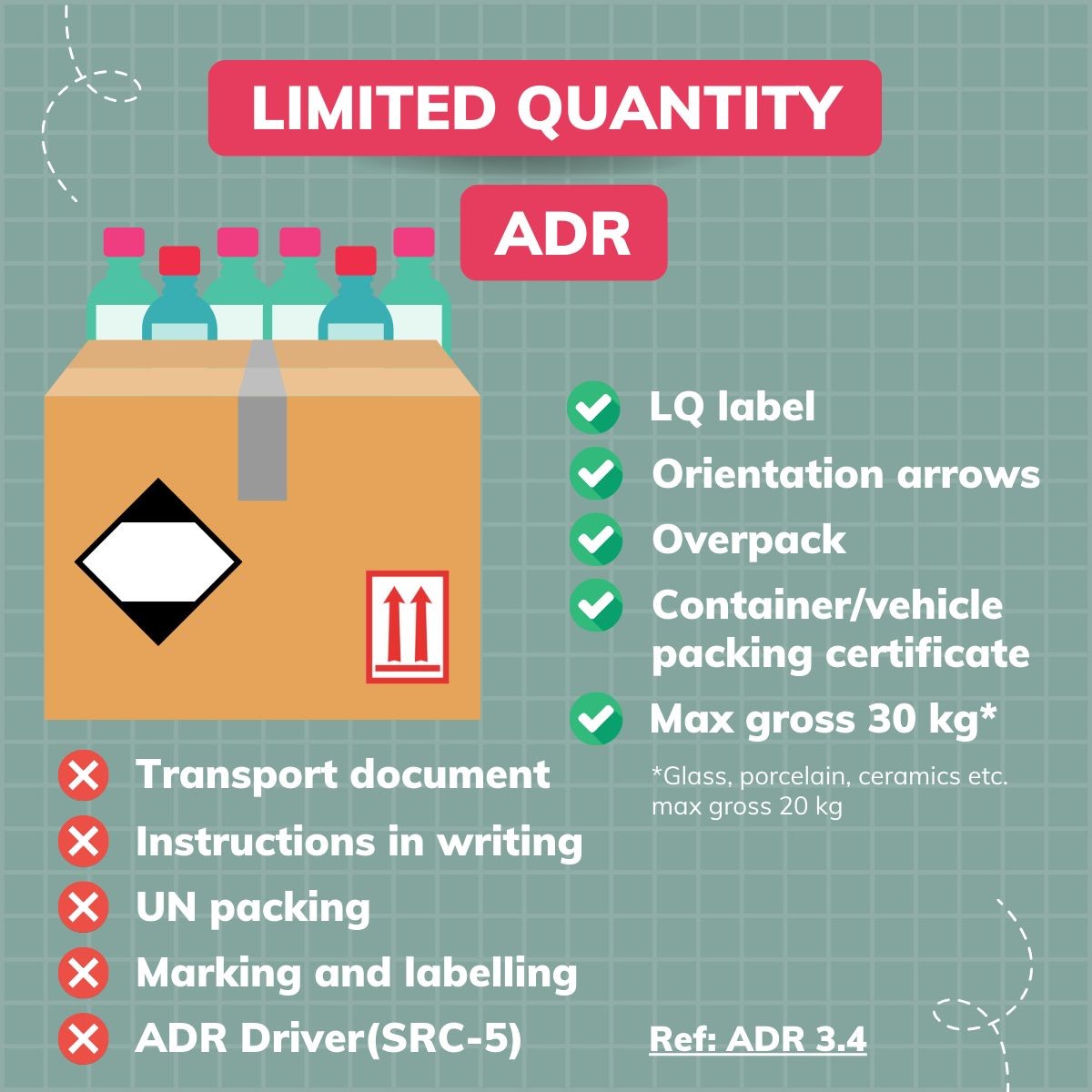
ADR labelling – all boxes and containers on a pallet must have correct labelling and the labels on all containers/ boxes/ receptacles must be visible.
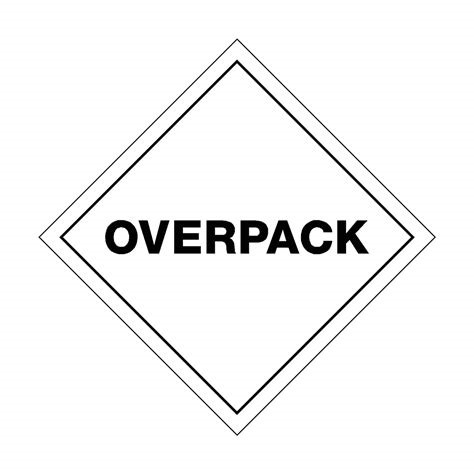
If goods are then wrapped to a pallet then all labelling must be present on the outside of the wrap and a DGN (Dangerous Goods Note) attached to the pallet plus an Overpack label




 01952 457050